05 / SERVICE DESIGN · INDEPENDENT CONCEPT
A booking is only
the beginning.
A creative-house identity and working service prototype. Choose a room, make a plan and carry the same details through changes, host preparation and arrival.
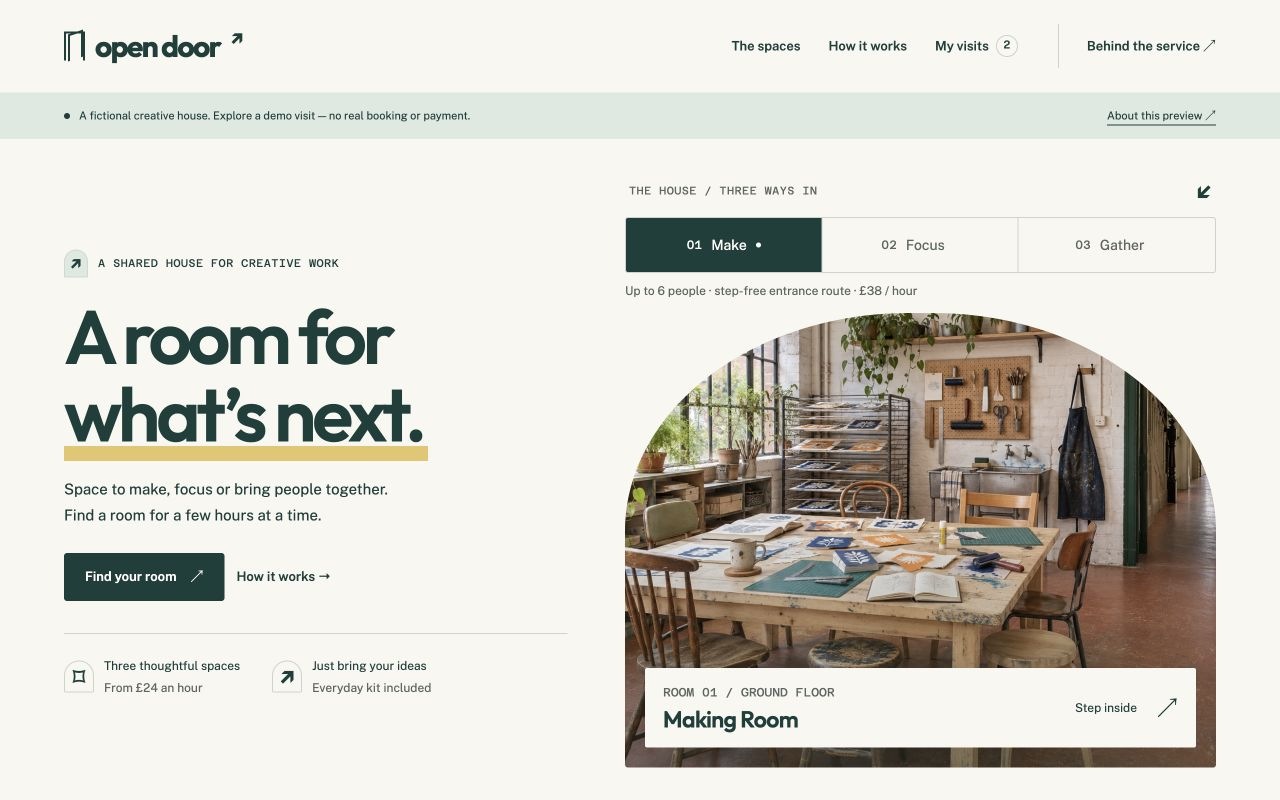
THE BRIEF / ROOM CHOICE
Fit before time.
Start with the room.
For one house with three spaces, a search-first marketplace adds unnecessary work. A calendar-first flow asks people to choose before they understand the room. I led with purpose, capacity, equipment, access and hourly price.
Make the next step visible.
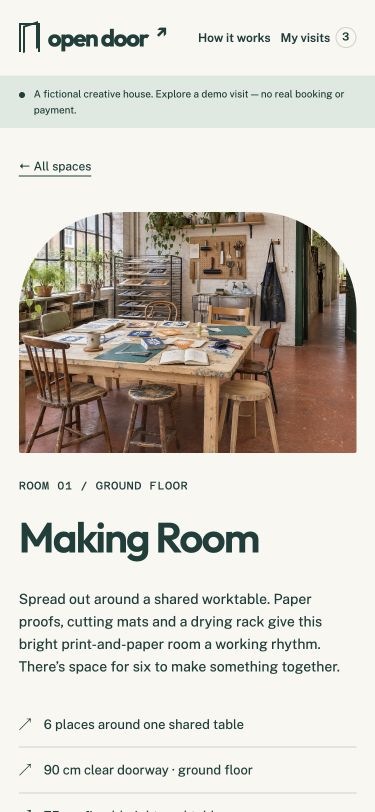
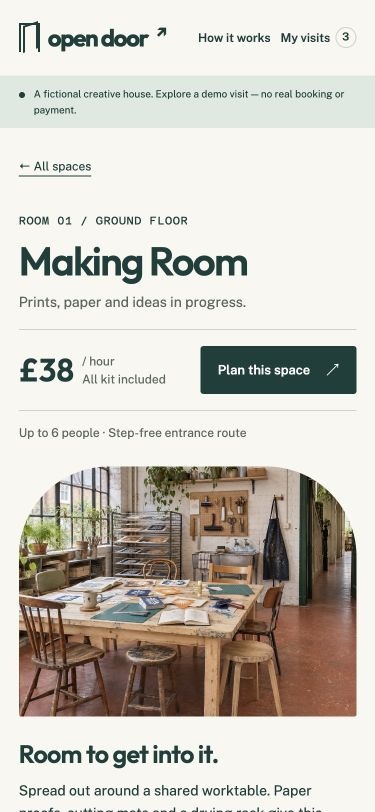
The first mobile detail page put a large photo before the facts and action. I moved the room name, price, capacity, access summary and “Plan this space” above the photo. Detailed equipment and route information follow.
THE HANDOVER / CHANGES & ARRIVAL
A changed plan needs
new preparation.
Booking confirmation is one touchpoint. The host needs the current room, group size and time too. Changing a visit keeps its reference, updates the arrival route and resets all three preparation checks.
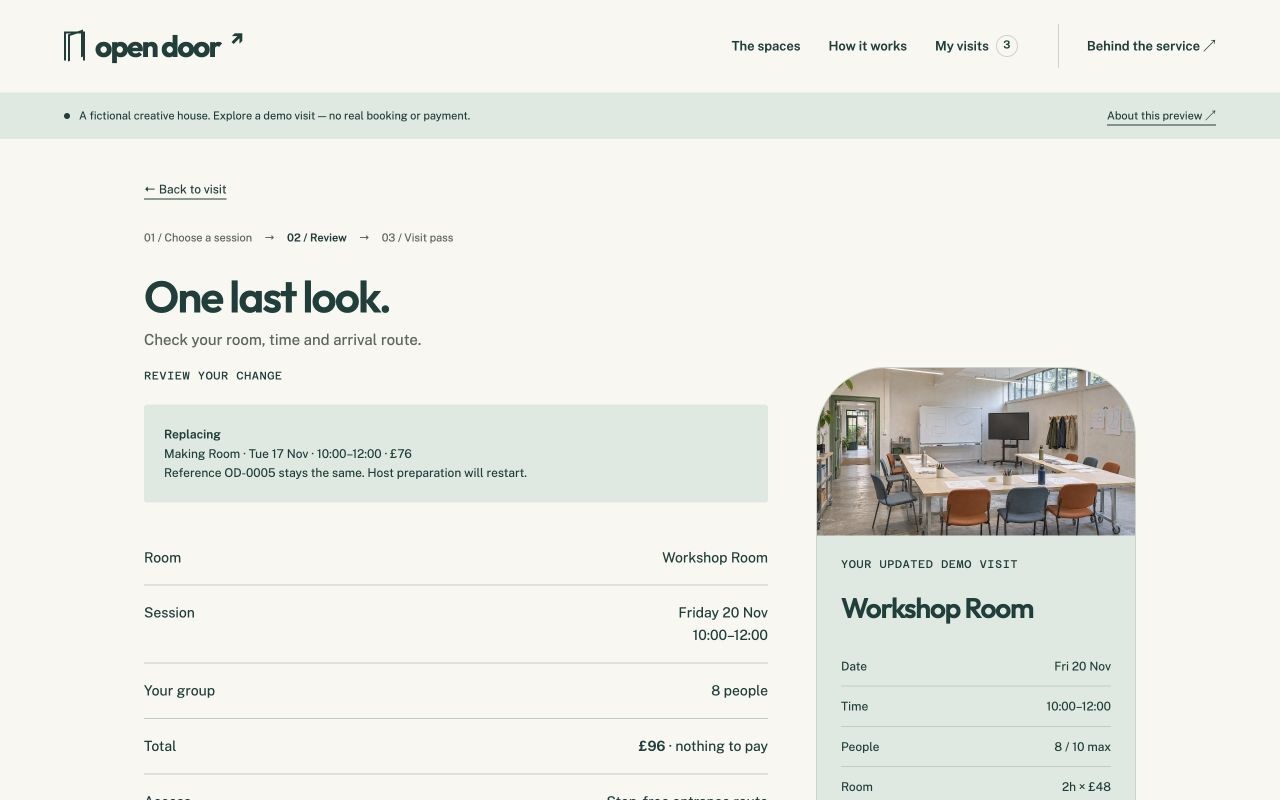
Visitor / one current pass.
The pass brings together the plan, host readiness and route. A cancelled visit keeps a receipt; a changed visit keeps its reference.
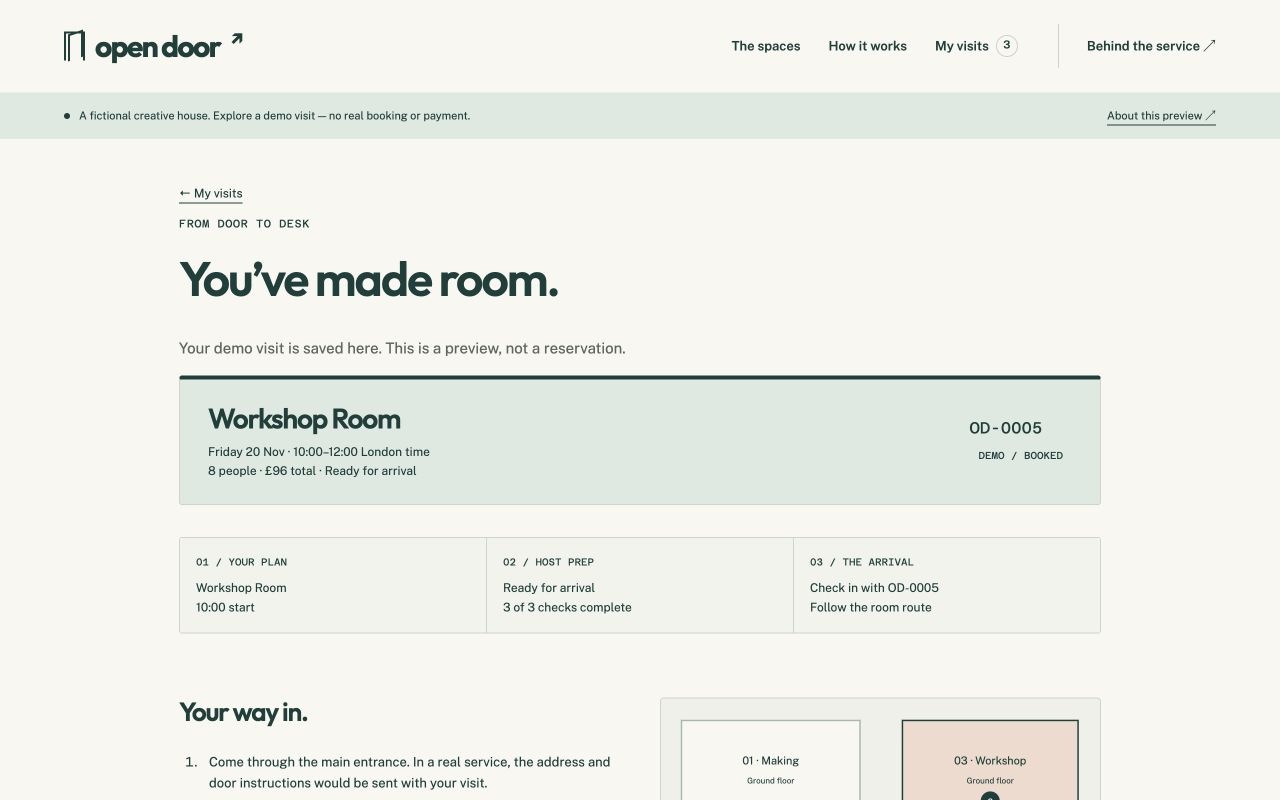
Host / prepare against that plan.
Room-specific tasks carry the group size. Complete preparation before recording arrival, then complete the visit.
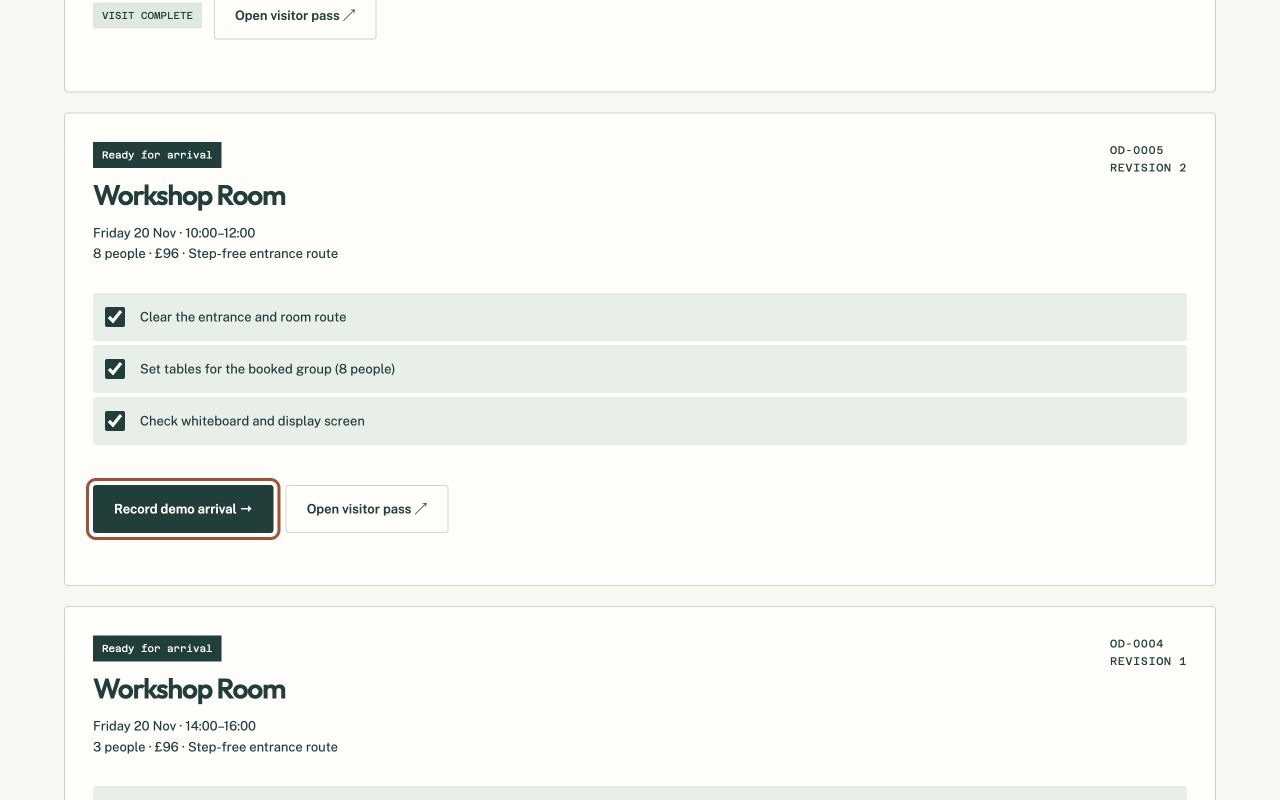
Internal walkthrough: four people in Making changed to eight in Workshop. The reference stayed OD-0005; preparation reset and was completed against the new plan.
IDENTITY / THREE WORKING PERSONALITIES
One house. Different kinds of headspace.
Spruce, plaster, brass and the doorway frame connect the identity. Furniture, light and traces of use give each room its own purpose. Outfit carries the welcome; Public Sans keeps the practical information readable.
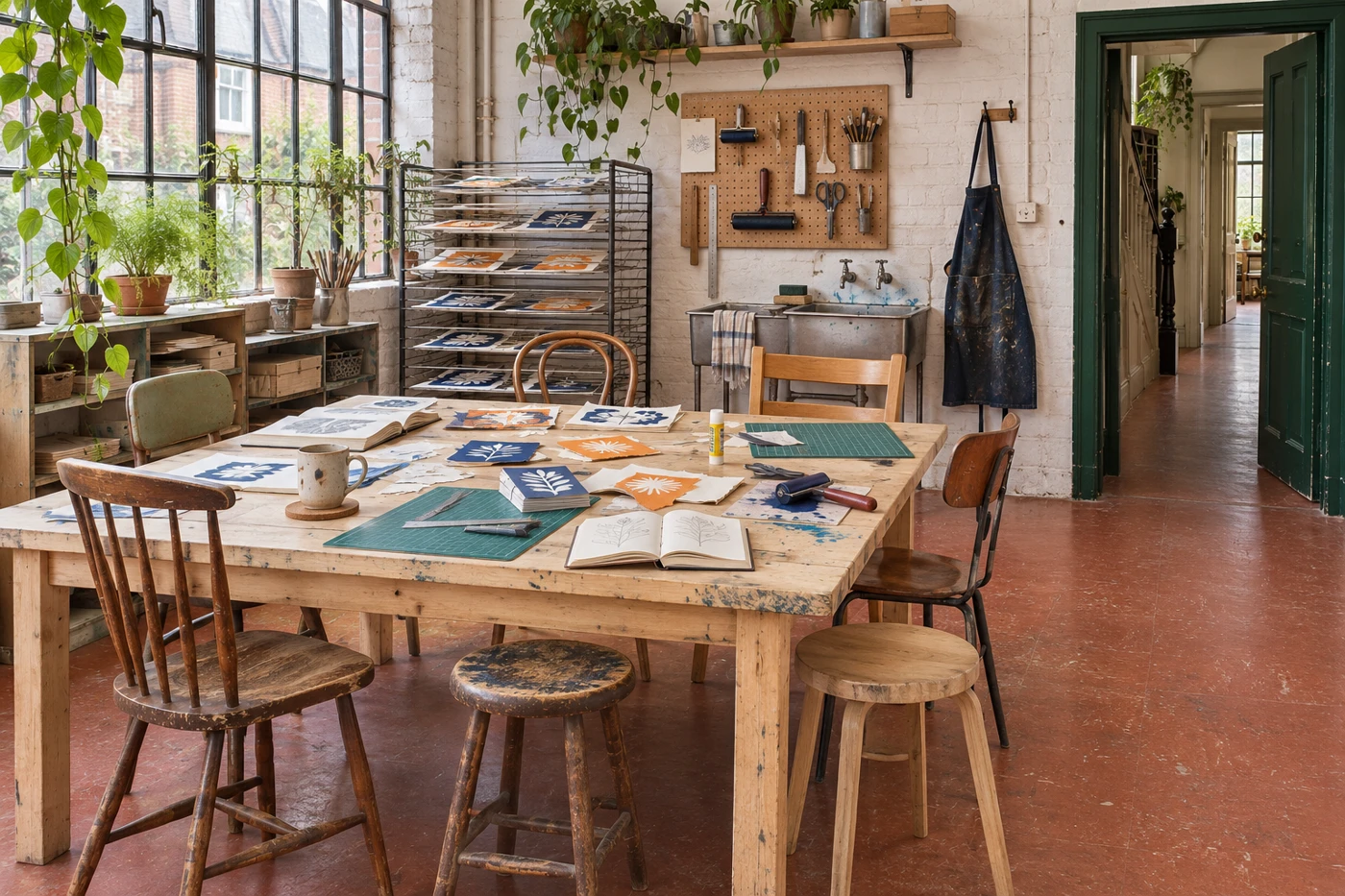
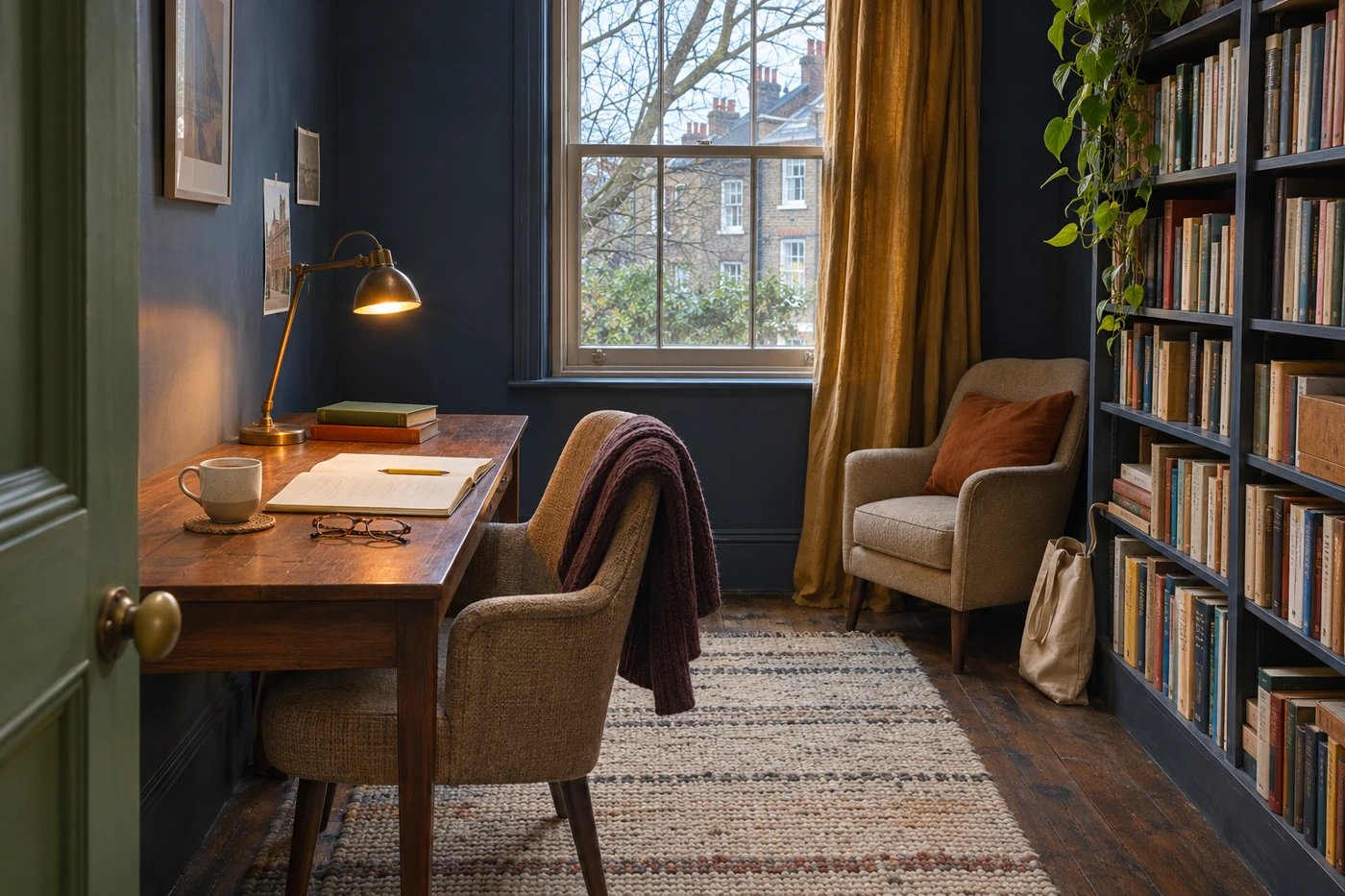
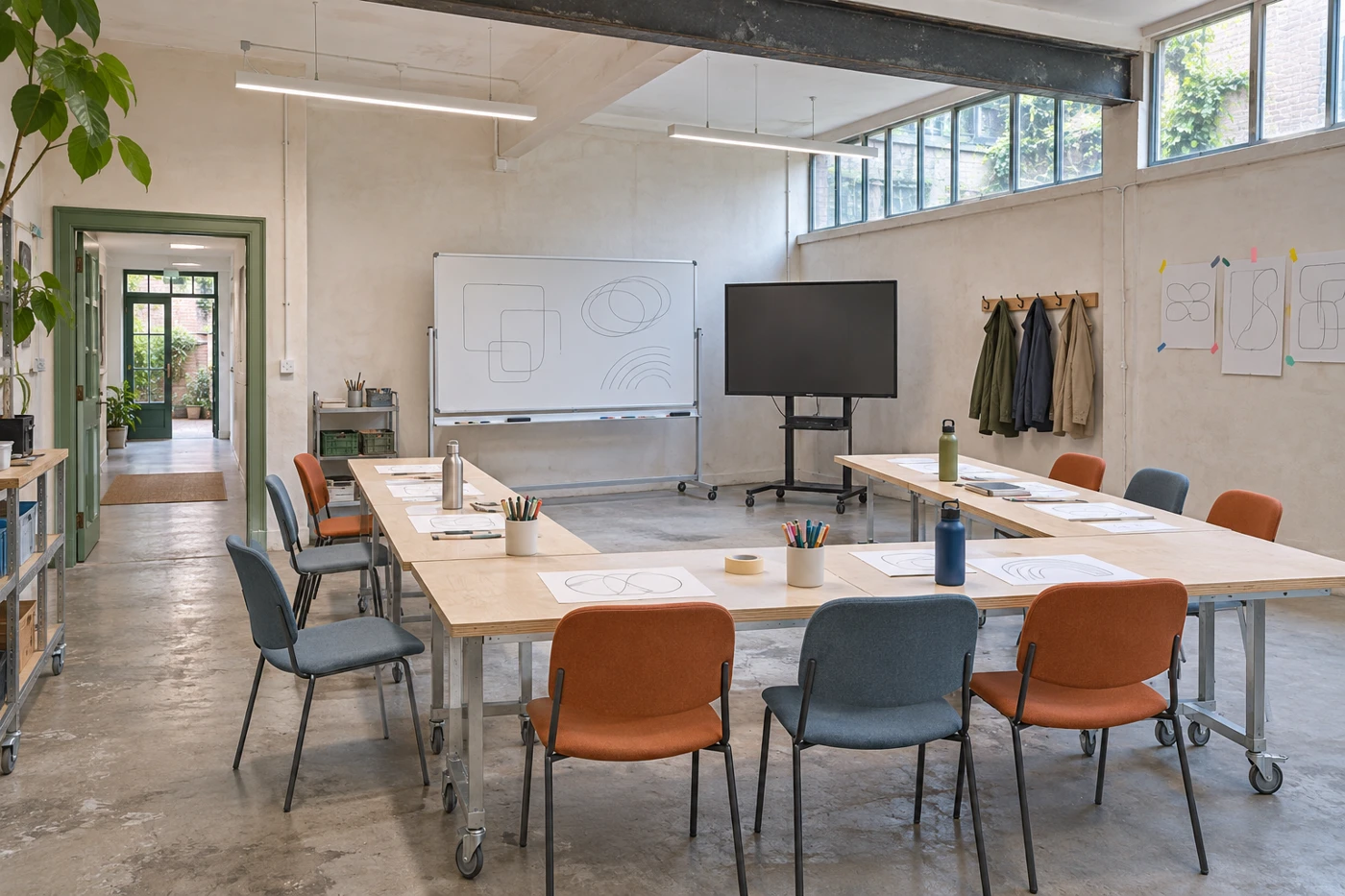
The opening doorway and visitor-controlled room preview bring that identity into the interaction. Reduced-motion preferences are respected.
SERVICE BLUEPRINT
One plan, on both sides of the door.
The blueprint connects visitor actions, visible touchpoints and host work. One visit record supports the journey through selection, changes and arrival.
Authored concept blueprint. Visitor-facing touchpoints sit above the host and supporting service work.
VALIDATION / NEXT STEP
What works. What to learn.
Checked internally.
Eight model tests cover capacity, availability, stale reviews, changes, cancellation, host transitions and calendar exports. Browser checks cover the connected visitor/host flow and phone layouts.
The mobile iteration is visible above; the working prototype demonstrates how a changed plan carries through to preparation.
Next: watch people use it.
Participant study is pending. A five-task facilitator kit covers room choice, booking, a change after preparation, arrival and cancellation. It includes setup instructions, local notes and exports.
Open the reader test kit ↗Self-initiated work by Clinton Feyisitan, developed with AI assistance. Interiors are generated fictional spaces; room and access facts are illustrative. The prototype stores demo visits in this browser, with no real reservations or payments. Research reported here consists of internal checks.
Desk sources & credits
- GOV.UK: Map and understand a user's whole problem
Connected the visitor journey to host preparation and arrival, rather than ending at confirmation. - W3C WAI: Multi-page forms
Grouped selection and review into explicit steps, retained choices when editing, and reflected progress in page titles. - Historic England: Venue accessibility checklist
Included route, door, floor and shared-facility facts. These fictional specifications are not an access audit.
Desk sources reviewed 4 November 2026. Fonts: Outfit, Public Sans and Azeret Mono / SIL OFL. Original doorway identity, route diagrams and room art direction. MotionSites Studio was reviewed as a motion reference; the implementation is custom.